Feinstein shuts off California water talks until 2015

Washington 11.20.14 — By Michael Doyle, Bee Washington Bureau

NewsDemocratic Sen. Dianne Feinstein of California on Thursday pulled the plug on secret, high-stakes negotiations over a water bill for her drought-plagued state, saying she and fellow lawmakers will try again next year.

Feinstein’s unexpected move ends, for now, what had become an increasingly contentious fight over ambitious drought-fighting legislation whose details few people have seen.

“You’ve got to work with people to get something done,” Feinstein said in an interview. “I’m going to put together a first-day bill for the next Congress, and it can go through the regular order.”

Right up until Thursday, Feinstein and Republicans in the House of Representatives had been pushing hard to beat the Capitol Hill clock, as the lawmakers and their staffs swapped text language and haggled over details in hopes of completing a bill before a scheduled Dec. 11 adjournment. The negotiators had taken care of “a lot of low-hanging fruit,” said Rep. Doug LaMalfa, a Republican from Butte County.

Now, the clock will be reset when the 114th Congress convenes, with Republicans controlling both the Senate and the House.

“We’ve come a long way,” said Rep. Devin Nunes, R-Tulare. “These type of things happen in negotiations.”

Nunes, who wrote the original version of the bill eventually passed by the House in February, said “we’ll continue to try to work together” and that “we appreciate that Sen. Feinstein has negotiated in good faith.”

Nunes also said he and his fellow House Republicans wouldn’t stop trying to accomplish water legislation this Congress. With time so short, that long-shot effort would probably require trying to add language to a must-pass spending bill, a dicey proposition for anything ambitious and controversial.

Responding to the state’s devastating drought, the GOP-controlled House passed a far-reaching bill in February on a largely party line 229-191 vote.

Introduced by freshman Rep. David Valadao, R-Hanford, and drawing largely on a bill previously introduced by Nunes, the House bill rolls back a landmark 1992 law that directed more water to protect the Sacramento-San Joaquin Delta. The bill removes wild-and-scenic protections from a half mile of the Merced River, and it authorizes new water-storage projects on locations that include the Upper San Joaquin River, among other provisions.

The House measure also repeals the expensive San Joaquin River restoration effort, which has cost more than $100 million to date and is anticipated to go higher. The bill replaces the restoration plan with something more modest.

The legislation was passed without the usual committee hearing and markup, as House members insisted time was of the essence.

“We have to make sure the crisis we’re facing today is addressed,” Valadao said at the time. “If the other side has a solution, bring it to the table. I’m happy to negotiate.”

Feinstein countered in May with a slimmed-down bill passed through the Senate by unanimous consent, also without a committee hearing. Ever since, Democrats who voted against the 68-page House bill, and whose congressional districts span part of the 1,100 square-mile delta, have complained they have been shut out of the subsequent negotiations, in which Feinstein has taken the lead role.

“She’s doing the bidding of a very small group of people,” Rep. George Miller, D-Martinez, said Thursday, prior to Feinstein’s decision becoming public. “This is just money and politics talking.”

In particular, Miller and other critics have contended that the legislation has appeared to be getting written for the benefit of the 600,000-acre Westlands Water District, whose general manager, Tom Birmingham, has been in Washington, D.C., this week for potential negotiations.

A Westlands representative declined to comment Thursday.


Miller called the exclusive negotiations “outrageous,” and the closed-door sessions prompted, in recent days, a flurry of negative newspaper editorials that Feinstein said Thursday were based on “misimpressions.” Draft copies of the legislation, some marked “confidential draft language, do not distribute,” were beginning to circulate on Capitol Hill in recent days, further prompting alarms in some Northern California circles.

“It is good news Sen. Feinstein has indicated she wants to work with all interests to craft a bill and not circumvent the regular committee process,” environmental activist Patricia Schifferle said in an email. “To that end, Sen. Feinstein needs to release a copy of her current draft, the agency comments and issues that remain unresolved so everyone can comment.”

Feinstein’s California Democratic colleague, Sen. Barbara Boxer, has played second fiddle on the secret water talks, saying in public only that she thought a consensus bill was possible. Gauging the enthusiasm of Boxer’s support has been complicated by the fact that a number of her traditional environmentalist allies are unhappy with the bill efforts.

“I’m really glad that Sen. Feinstein is taking the time to get more feedback on her updated legislation,” Boxer said. “As I have said from the beginning of this process, we need to hear from all the stakeholders who rely on a fair allocation of California’s water supply.”

Mark Grossi of The Fresno Bee contributed to this report. Contact Michael Doyle: mdoyle@mcclatchydc.com, (202) 383-0006 or @MichaelDoyle10 on Twitter.

Read more here: http://www.fresnobee.com/2014/11/20/4245563_feinstein-pushes-california-water.html?sp=/99/217/&rh=1#storylink=cpy


Is Dianne Feinstein Crafting a Secret Water Deal to Help Big Pistachio?

UPDATE 11.20.14: Sen. Dianne Feinstein has called off her backroom negotiations to push a California water bill through the current, lame-duck Congressional session, The Fresno Bee reported late Thursday afternoon. But she’s not finished trying to make a deal with Big Ag-aligned GOP reps. She vowed to “put together a first-day bill for the next Congress, and it can go through the regular order,” the Bee reported. 

———————————————————————————————————-

By Tom Philpott 11.20.14: Sen. Dianne Feinstein (D-Calif.) is negotiating a behind-closed-doors deal with Republican lawmakers to pass a bill that would ostensibly address California’s drought—an effort that has uncorked a flood of criticism from environmental circles.

Feinstein’s quiet push for a compromise drought bill that’s palatable to Big Ag-aligned House Republicans has been in the works for six months, Kate Poole, a senior attorney with the Natural Resources Defense Council, told me. And it has accelerated recently, as the Senator hopes to pass it by year end, during the “lame duck” period of the outgoing Democratic-controlled Senate.

Feinstein spokesman Tom Mentzer wrote in an email that “draft language continues to be negotiated between House and Senate offices and nothing is final.” But he would divulge no other details—not even a timeline for when a broad outline of the controversial legislation might be released to the public.

The main issue involves management of the Central Valley Project, a federally owned irrigation system that moves water from California’s Sierra Nevada mountain range to farmland in the state’s main growing region, the Central Valley.

The state’s high-powered farm interests, particularly those in the desert-like zones of the Central Valley’s southwestern corner, want to maximize their access to these federally controlled water flows. This is precisely the part of the Central Valley that’s in the midst of a huge expansion of water-intensive almond and pistachio orchards.

“We’ve taken our vow of secrecy,” Rep. Valadao, who sponsored the House bill, said Tuesday.

Environmental groups like NRDC, meanwhile, seek to ensure sufficient water for the ecologically fragile Sacramento-San Joaquin Delta, which lies at the heart of the Central Valley Project, at the confluence of the state’s two largest rivers. The US Fish and Wildlife Service lists 19 Delta-dwelling species as “endangered” or “threatened.” The most famous of the threatened fish is the tiny delta smelt, which is what scientists call an “indicator species,” meaning that their health serves as a barometer of the larger ecosystem’s robustness. The delta smelt occupies the base of the area’s food web, feeding on simple organisms like plankton and providing forage for larger fish.

Back in February, the Republican-controlled House passed a bill that would effectively end efforts to reserve substantial water for the Delta and permanently allocate more water to farmers. Central Valley-based Rep. Devin Nunes (R.-Calif.), a major champion of the bill, had sponsored similar bills before the current drought set in, only to see them languish, Poole says. This time, Nunes, along with the bill’s sponsor, freshman Central Valley-based Rep. David Valadao (R.-Calif.) “used the drought as an excuse to pass a bunch of wish-list rollbacks these guys have had for a while.”

The bill drew widespread derision from Democrats. Back in Sacramento, Gov. Brown condemned it, declaring it would “override state laws and protections, and mandate that certain water interests come out ahead of others.” President Obama vowed a veto if the bill made it to his desk, claiming “it would undermine years of collaboration between local, State, and Federal stakeholders to develop a sound water quality control plan for the Bay-Delta.”

Meanwhile, Feinstein went to work on a companion Senate “emergency drought” bill. The effort “started out not-so-bad,” Poole says. But then, as the sausage-making process went on, it started taking on more agribusiness-friendly provisions, she says—like one that would redirect water from refuges to agricultural water districts, and another that would allow water transfers to farms to occur during critical salmon migration months—despite  federal and state protections.

In May, over the fierce objections of environmental groups, Feinstein pushed her bill through the Senate by unanimous consent, avoiding a floor debate. The San Francisco Chronicle called it “the product of months of closed-door negotiations with various interests, including House Republicans…Bay Area Democrats, who voiced their concerns, and various stakeholders including farm groups.”

The House bill’s sponsors applauded, expressing confidence that the two chambers could “come up with a bill for the president to sign, so we can fix this problem.”

Soon after, Feinstein’s behind-the-scenes negotiations with those GOP lawmakers began. They never bore fruit, sidetracked by generalized partisan wrangling in the run-up to the November elections. But now that the election is over, Feinstein is pushing hard to ram a compromise through Congress in the lame-duck session. California’s senior senator isn’t the only one who refuses to reveal details of the effort. “We’ve taken our vow of secrecy,” Rep. Valadao, who sponsored the House bill, told McClatchy news service Tuesday. Meanwhile, Tom Birmingham, general manager of the Westlands Water District, arrived in Washington this week to weigh in on the deal, McClatchy reported. The nation’s largest water district, Westlands supplies irrigation water to more 1,000 square miles of ag-rich, water-poor farmland in the southern Central Valley.

Environmentalists, stung by the lack of transparency, fear the worst. Patricia Schifferle of Pacific Advocates, a long-time observer of California’s water wars, notes that what’s being worked out is a compromise between a House bill that is “very detrimental in terms of water-quality protections and environmental protections” and a Senate bill that’s not much better—meaning that any likely compromise is likely to “take more water from the environment and give more to the west side of the southern San Joaquin [Central] Valley.”

Feinstein has long-time connections to some of the biggest players in the southern Central Valley agriculture, including the Resnick family, which owns a vast agricultural empire built on pistachios, almonds, and pomegranates.

The NRDC’s Poole says it’s anyone’s guess whether Obama would sign such a bill. She said the president would likely look to high-level California Democrats for guidance. Obama’s vow to veto the House bill came after Gov. Brown’s announced his fierce opposition to it, she pointed out. I asked Brown’s office for the governor’s take on Feinstein’s latest effort. “We have not taken a position on this legislation,” a spokesperson replied. I followed up to ask whether Brown or his team had seen drafts of the legislation, but got no reply.

Feinstein, it should be noted, has long-time connections to some of the biggest players in the southern Central Valley agriculture, including the Resnick family, which owns a vast agricultural empire built on pistachios, almonds, and pomegranates. According to the money-in-politics tracker Open Secrets, the Resnicks donated $9,800 to Feinstein’s campaign in the 2011-’13 period, and $17,900 to Rep. Valadao, the sponsor of the House bill. Westland Water District has also donated to Feinstein, Nunes, and Valadao (see its 2012 and 2014 contributions).

And Feinstein has certainly carried water, so to speak, for the Resnicks before. Back in 2009, according to the investigative website California Watch, Stewart Resnick “wrote to Feinstein, complaining that the latest federal plan to rescue the Delta’s endangered salmon and smelt fisheries was ‘exacerbating the state’s severe drought’ because it cut back on water available to irrigate crops.”

Feinstein promptly forwarded Resnick’s complaint to two US Cabinet secretaries, adding in her own letter that the administration should spend $750,000 “for a sweeping re-examination of the science behind the entire Delta environmental protection plan,” California Watch reported. The result: “The Obama administration quickly agreed, authorizing another review of whether restrictions on pumping irrigation water were necessary to save the Delta’s fish.”

Ultimately, protections for the Delta survived that maneuver. Whether they’ll survive these latest machinations remains to be seen.

http://www.motherjones.com/tom-philpott/2014/11/feinstein-secret-water-deal-drought-california


Talks on drought bill underway on Capitol Hill

 — by Michael Doyle and Mark Grossi

NewsCalifornia’s water future is boiling below the surface this week.

Only the chosen few have a clue about details. Bill documents, currently about 50 pages, are stamped “confidential draft language, do not distribute.” Capitol Hill doors are shut, congressional timetables are opaque and negotiators are strictly mum.

“We’ve taken our vow of secrecy,” Rep. David Valadao, R-Calif., said Tuesday.

The coming days, though, could be crucial.

House Republicans and Democratic Sen. Dianne Feinstein of California and their respective staff members have been amicably swapping proposed language and coming ever-closer to agreement. On Thursday, California’s GOP House members received a detailed briefing at their weekly lunch.

In a potentially telling move, Westlands Water District General Manager Tom Birmingham arrived in Washington this week. The water-hungry Westlands district stands to be a big winner in the legislation, and Birmingham’s presence enables him to weigh in, and possibly sign-off, more quickly.

“We’ve been talking about this legislation for months,” Birmingham said Tuesday.

Like most other farm contractors on the federal Central Valley Project, the Rhode Island-sized Westlands Water District was left with a zero allocation of Northern California river water. Farm leaders challenged the way state and federal officials divided up the little water that was available in this intense drought.

Responding to farmer unrest, the GOP-controlled House passed a far-reaching bill in February. Drawing largely on a bill previously introduced by Rep. Devin Nunes, R-Calif., it rolled back a landmark 1992 law that directed more water to protect the Sacramento-San Joaquin Delta. The bill also removed wild-and-scenic protections from a half mile of the Merced River and authorized new water storage projects, among other provisions.

The Senate countered in May with a slimmed-down bill passed by unanimous consent, also without a committee hearing.

Democrats who voted against the 68-page House bill, and whose congressional districts span part of the 1,100 square-mile delta, have complained they have been shut out of the subsequent negotiations. Some have seen scraps of language, such as a draft that cited the “significant public interest” and “urgency” over completing water storage project feasibility studies.

One draft version was 48 pages; by the time it’s put into formal legislative language, the final bill could be upwards of 60 pages or more.

Environmentalists, fishing and wildlife advocates also want a public hearing on any drought legislation. They say they hear rumors of a bill that ignores environmental law to get more Northern California water for Westlands, a 600,000-acre district based mainly in Fresno County.

Jerry Cadagan, longtime water activist, said many groups do not want such a bill to pass quietly through the Senate.

“If there’s no opposition, wham! It could go through,” he said. “That’s what we fear.”

Seven groups have written their concerns and opposition to Feinstein. The groups include the National Resources Defense Council, Audubon California and Ducks Unlimited.


“With decades of experience, Sen. Feinstein knows the importance of being inclusive on controversial and complex pieces of legislation that impact not only the state of California, but other Western states,” environmental activist Patricia Schifferle said Tuesday.

Feinstein’s spokesman, Tom Mentzer, said Tuesday only that “draft language continues to be negotiated between House and Senate offices and nothing is final.” Feinstein’s California colleague, Democratic Sen. Barbara Boxer, who chairs the Environment and Public Works Committee, has yielded leadership on the water issue to Feinstein.

Republicans add that the House Democrats who represent the Delta and Northern California are never going to vote for the final bill anyway, so it makes no political sense to let them into the room where the deals are cut. One of the few Democrats besides Feinstein who’s privy to details is comfortable with this calculation.

“I’d like to see if we can get an agreement by the end of this week,” Rep. Jim Costa of California, one of the few Democrats to vote for the House bill, said Tuesday. “If we’re successful, then we can share the language with others.”

The one-sided secrecy is also a kind of mirror image of what happened in 1992, when Democrats stiff-armed Republicans in writing the environmentally oriented Central Valley Project Improvement Act. Republican and farmer anger over the 1992 CVPIA contributed to years of litigation, restlessness and, ultimately, backlash.

Mark Grossi, a staff writer for The Fresno Bee, reported from Fresno, Calif., Doyle from Washington. Email:mdoyle@mcclatchydc.com; Twitter: @MichaelDoyle10.

Read more here.


Feinstein freezes out north state in water bill talks

Editorial graphicSacramento Bee, 11.19.14: Sen. Dianne Feinstein and House Republicans have been secretly negotiating drought relief legislation that could severely alter California water policy. She should know better.

Any legislation on the topic of water would have far-reaching implications, and ought to receive a full public airing before a congressional vote.

California’s senior senator is negotiating with Central Valley representatives and agencies that rely on water from the Sacramento-San Joaquin Delta, and is shutting out House members who represent the Delta and Northern California.

The fear among environmentalists and Northern California congressional members, including Feinstein’s fellow Democrats, is that the legislation would override environmental protections so more water could be pumped south to Central Valley farmers and Southern California residents.

They worry that a bill could be pushed through Congress without committee hearings, possibly this week or the week after Thanksgiving. That is no way to make policy, especially when the varied interests of Californians are at stake.

Michael Doyle of the McClatchy Washington Bureau and Mark Grossi of The Fresno Bee reported that only a few congressmen and staff members have seen the documents stamped “confidential draft language, do not distribute.” California’s Republican House members received a briefing last week.

Feinstein issued a statement through her press secretary saying that “the plan has always been to seek broad input.”

“We expect to have draft legislation ready for public comment soon, at which time public input will be sought,” she said.

That sort of top-down manner of legislating might work on national security matters, but will make it difficult for Feinstein to generate trust from the individuals who are not at the table but have a legitimate stake in California’s water future.

Rep. John Garamendi, D-Walnut Grove, said in an interview that the opaque process is “wrong. It’s not the way to do this.” He cited concerns that the legislation could damage the Delta and the fishing industry, and water down the Endangered Species Act.

While Garamendi and other Northern California congressional members are frozen out of the talks, Tom Birmingham, the general manager of Westlands Water District, which depends on water pumped from Northern California, has a seat at the negotiating table.

Westlands clearly has an interest in any legislation. Westlands farmers received no Delta water allocations this year. But Northern Californians have an interest as well, including environmentalists and members of the fishing industry.

There is a fundamental imbalance if interest groups and Republicans have a seat at the table but the congressional member who represents the Delta is left out.

If Sen. Feinstein won’t embrace an open debate on such critical issues, Sen. Barbara Boxer, who will remain chairwoman of the Environment and Public Works Committee through the lame duck session, ought to stand up and object.

Action Alert: Calls Needed Immediately!

Any Congressional bill worth considering must NOT be negotiated in secret!

Action Alert11.18.14: All who are interested in protecting the waters of the Sacramento Valley from the fate suffered by the Owens and San Joaquin Valleys, PLEASE make phone calls today!

Senator Feinstein is urgently trying to reconcile her so-called “drought” Bill (2198) with the House version that is even worse (3964) at the end of 2014. The public will be given about 48 hours to review something that has been negotiated behind closed doors for 6 months! The bill also impacts other states besides California. See also Sacramento Bee editorial, “Feinstein freezes out north state in water bill talks” (11.19.14) and Fresno Bee report, “Talks on drought bill underway on Capitol Hill” (11.18.14).

Because a public version of the present legislation hasn’t been released still, here are destructive elements that were in past versions of the Bill.

  • Water transfers from the Sacramento Valley are expedited circumventing public processes in federal environmental laws.
  • Refuges are pushed to turn to groundwater instead of relying on what the Central Valley Improvement Act requires in the way of surface water deliveries.
  • Most benefits are for desert agriculture in the southwestern San Joaquin Valley – not California as a whole – and especially not the area of origin where most of the water comes from: the Sacramento River Watershed.

If you want to know more about the major players, watch this excellent video created in 2010 by Salmon Water Now (Bruce Tokars): http://vimeo.com/11337689.

Consider the following when making your calls:

1. The process needs to be the issue since the legislation hasn’t been released. Why have discussions been closed for 6 months? Why is it being rushed through the Senate without appropriate hearings?

2. Demand access to the process — e.g., request copies of the bill drafts, agency comments, water district comments.

3. Ask Senator Feinstein what is her intent. Did her staff write this Bill? How much influence did Westlands [1] have on the Bill? A great deal of it is likely incomprehensible in many areas, so once a copy is finally released, rather than trying to figure out the conflicting sections between water rights and the transfer sections or area of origins sections, ask all the Senators to explain who benefits and who loses in this deal. Clearly, if it isn’t special interest legislation, releasing it with time to review and allow public hearings wouldn’t be a threat.

Action Needed: Call the following and express your views.

  • Senator Dianne Feinstein (D- CA) – (202) 224-3841 or (415) 393-0707 (Appropriations Committee)
  • Senator Barbara Boxer (D- CA) – (202) 224-3553 or (510) 286-8537 (Chair of the Environment and Public Works Committee)
  • Senator Mark Udall (D-NM) – (202) 224-6621
  • Senator Jeff Merkley (D-OR) – (202) 224-3753; Bill sponsor (Appropriations Committee)
  • Senator Maria Cantwell (D-WA) – (202) 224-3441 (Energy and Natural Resources Committee)
  • Senator Harry Reid (D-NV) – (202) 224-3542 or (775) 686-5750 (Reno)
  • Senator Brian Schatz (D-HI) – (202) 224-3934 (Energy and Natural Resources Committee)

[1] Westlands Water District is a junior water rights holder located in the southern San Joaquin Valley. They have been trying to garner more secure water using politics for decades. Click here to locate Westlands on ownership maps.

Draft EIS/EIR “seriously flawed” – Butte County Board of Supervisors

11.14.14 — Butte County Board of Supervisors draft comments on the draft Environmental Impact Statement/Environmental Impact Report (EIS/EIR) on a proposed Long Term Water Transfers Program:

Butte County logo“Based on our preliminary view, we believe that the EIS/EIR is seriously flawed and will need to be revised and recirculated. The relied-upon data is outdated, incomplete and selectively chosen. The result is that the EIS/EIR fails to meet the requirements of the National Environmental Policy Act and the California Environmental Quality Act.” Click link to read the full Butte County draft comments document.

A tribute to California’s ‘First Lady of Water’

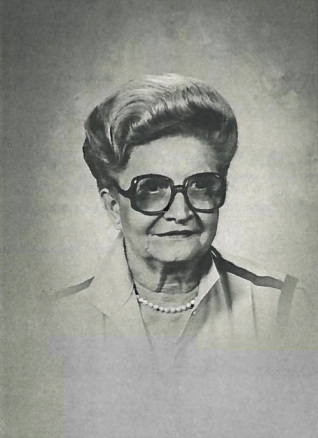
davis_portraitA former telephone operator from Nebraska, Pauline Davis became the longest-serving woman in the California Legislature and an effective advocate of local water development. 

Click here to read a tribute to Pauline Davis by Tina Cannon Leahy on California Water Blog.


Letter to Editor: No on Prop 1

Proposition 1 provides a series of benefits and detriments to different constituents much as a legislative bill. It is nonsensical to ask for a simple yes or no vote on a proposition with many complex and contradictory parts. The legislators and governor are not completing their obligations by asking the public to make this decision for them.

The statement “Funds provided by this division shall not be expected to pay the costs of the design, construction, operation, mitigation or maintenance of Delta conveyance facilities.” [Chapter 4, 79710 (a)] is contradicted by a criteria used for funding “Water quality and ecosystem benefits related to decreased reliance on diversion from the Delta or instream flow” [Chapter 9, 79757(b)]. This appears to provide compensation (mitigation) for building the twin tunnels under the delta.

A brief phrase in Chapter 8 lists conjunctive use as eligible for funding [(79751(c)]. This supports the sale of groundwater to be transferred south.

As the state looks at groundwater for storage, they are modifying natural multiple season recharge, and threatening both the legal rights of groundwater users and natural ecosystems (temporary streams and valley oaks). Also, will the control of groundwater recharge under pollution control end up with the state claiming groundwater for state use?

Supporting water storage projects repeats past errors. California does not receive enough rainfall to justify building more dams. Furthermore, dams reduce flood plain and delta ecosystem quality by depriving them of the recharge and cleaning benefits of flood waters.

Vote no on Proposition 1.

Doug Alexander

(Letter to the Editor, Chico Enterprise-Record, sent 10.28.14)

Long-Term Water Transfers EIS/EIR Summary

Click here to view the Executive Summary of the

Long-Term Water Transfers Environmental Impact Summary/Environmental Impact Report

Prepared by:

  • US Department of the Interior, Bureau of Reclamation, Mid-Pacific Region, Sacramento, CA
  • San Luis & Delta-Mendota Water Authority, Los Banos, CA

September 2014